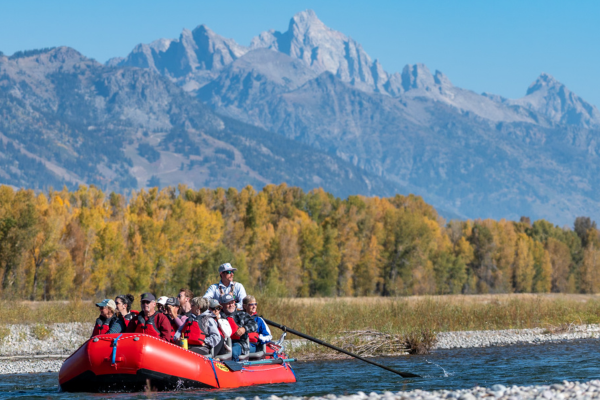
Jackson Hole’s short, explosive growing season makes spring and summer feel like a celebration. Thanks to the high altitude and long winters, the Greater Yellowstone ecosystem enjoys only about 60 frost‑free days each year. During this brief window from May through September, our valley erupts with wildflowers and wildlife, busy with feeding and raising their young. As river guides who spend nearly every day outside, we want to help you plan your visit around these natural spectacles.
The Blooming Calendar: May–September
Wildflower season kicks off in late May when temperatures rise and the valley floors start to thaw. Grand Teton National Park divides the area into three distinct zones – sagebrush valley, forest floor, and alpine zone – each with its own parade of flowers:
- Valley floor (May–June): Look for skyrocket gilia, larkspur, and our state flower, the striking Indian paintbrush, blooming across sagebrush flats. Balsamroot and lupine add yellow and purple pops later in June.
- Forest floor (June–July): Moist, shaded areas within lodgepole and spruce forests host fireweed, columbine, and Monkshood. These tall blooms often linger into early August.
- Alpine zone (July–August): Above tree line, tiny flowers hug the ground to survive wind and cold. Moss campion and alpine forget‑me‑not carpet rocky slopes with pink and blue petals. High meadows on Paintbrush Divide and Hurricane Pass are at their best in mid‑July.
Because the growing season is so short, blooms move quickly from lower elevations to the high mountains. If you’re hoping to see peak displays, plan your visit around July 4 for the valley or mid‑July through early August for alpine meadows. Even long after the fireworks are over, a hike through Cascade Canyon or around Jenny Lake will still reveal pockets of color.

Teton Pass & Cache Creek: Mid‑July Peak
Not all flowers require a backcountry trek. Just west of town, Teton Pass bursts with wildflowers from mid‑July through early August. Pull over at the summit parking lot and wander along the ridgeline; you’ll find lupine, paintbrush, and wild geranium beneath sweeping views of Jackson Hole. Closer to town, the Cache Creek drainage is renowned for its diversity of species; naturalist Susan Marsh once counted over 300 species in the first two miles. Bring a field guide or download a wildflower app and see how many you can identify.
Wildlife Viewing: Where & When to Look
Wildflowers aren’t the only stars of our short summer. Animals take advantage of longer days to feed, breed, and raise their young. Here are some of our favorite places and times to watch wildlife:
Moose‑Wilson Road
This narrow, partially dirt road winds eight miles between Teton Village and the town of Moose. Beaver dams are visible from your car, moose are often spotted browsing willows, and in the fall the road becomes a hot spot for bears. Drive slowly and be prepared to stop for wildlife; the road is narrow and curvy so you’ll want to use pullouts when you see animals.
Snake River & Oxbow Bend
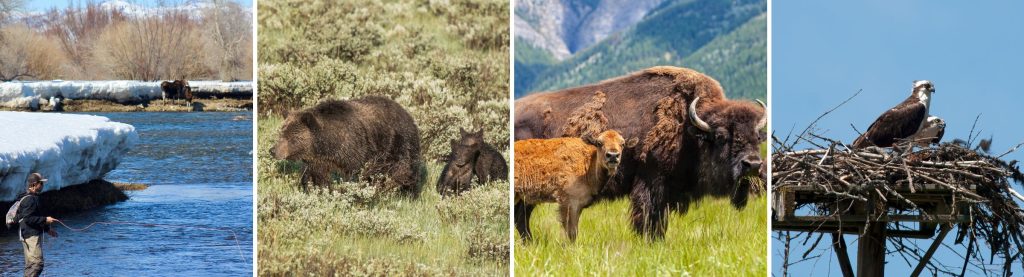
Along the Snake River between Jackson Lake Dam and Moose Junction, you might see elk grazing in meadows, bison eating sagebrush flats, and bald eagles or ospreys nesting in cottonwoods. Stop at Oxbow Bend at dawn or dusk to watch river otters and maybe catch a glimpse of a swimming beaver.
Mormon Row & Antelope Flats
East of the town of Moose, the historic homestead area around Mormon Row offers sweeping views of the Tetons and reliable wildlife sightings. Bison and pronghorn graze the open grasslands while coyotes and kestrels hunt mice and grasshoppers. Visit in late spring to see bison calves (known as “red dogs”) frolicking beside their mothers. The open, sagebrush habitat here makes bison viewing safer and easier than in forested areas.
| Month | Wildflower Highlight | Wildlife Highlight | Key Activity |
| May | Thaw/Early Greens | Bison Calves (“Red Dogs”) born, and bears emerge from dens | GTNP Inner Loop Road opens (May 1) |
| June | Valley Floor Peak (Balsamroot, Lupine) | Moose Calves born (late May/early June), Elk Calving | Low-elevation hiking, scenic drives |
| Early July | Overall Peak (Valley & Forest Blooms) | Active Elk, Bison, Osprey at rivers | Peak season for float tours |
| Late July/Aug | Alpine Peak (Teton Pass, High Trails) | Bears actively feeding (berries), Active small mammals | High elevation hiking |
| Sept | Golden Aspens, Fall Colors | Elk & Moose Rut (mating season), Bears focused on feeding | Prime Photography (Fall) |
Wildlife Viewing Etiquette
The animals that call Jackson Hole home deserve respect. Whether you’re standing in a meadow or watching from your car, always keep a safe distance. The National Park Service recommends staying at least 100 yards from bears and wolves and 25 yards from all other wildlife. Use binoculars or a zoom lens for close views, and never position yourself between an adult and its young. Beavers, moose, and bears along Moose‑Wilson Road may appear habituated to people, but sudden movements or approaching too closely can stress animals and lead to dangerous encounters.
In addition to keeping your distance:
- Stay on designated trails to protect fragile plants and reduce erosion.
- Carry bear spray and know how to use it. Make noise while hiking to avoid surprising animals.
- Leave no trace. Pack out all trash and keep dogs leashed in developed areas. Pets are not allowed on most park trails, and wildlife should never be chased.
Plan Your Visit
If you love nature’s pageantry, Jackson Hole’s wildflower and wildlife season will not disappoint. From the valley floor to the alpine peaks, flowers paint the landscape from May through September, while moose, bears, and birds are active along rivers and roads. Pack your camera, a pair of binoculars, and after a day of exploring, come relax on a scenic float in the comfort of chairs down the Snake River with us. Our river corridor is the best place to spot Bald Eagles, Ospreys, and river otters. Our guides would love to share their latest wildlife sightings and help you spot the monkshood and fireweed blooming along the riverbanks. Book your scenic float today and see the ecosystem from a new perspective!